
The Phoenix Suns are in the playoffs for the first time since 2010. In the intervening years – no, the unending feeling playoff drought, the team has changed substantially. The 11 year cycle of despair and disappointment has brought change; a lot of it. The Suns have had six coaches and a different leader in win shares nearly every season. Only over the last few seasons has the roster stabilized around Devin Booker, who was for a period, the only good thing the Suns had to offer. Even their home in Downtown Phoenix has undergone noticeable change, from traditional sponsors to a sponsor that was somehow named for a place that was not the arena to a total renovation with no sponsor whatsoever, the arena is basically all new. I could go on about how much the franchise has both altered itself and its trajectory, but suffice it to say that very little in Phoenix has changed as much as the Suns between 2010 and today.
Well, except for Downtown Phoenix, which will be hosting playoff basketball once again.

Here I’ll show you some of what has changed and why the Downtown Phoenix that you’ll see if you’re headed to the game or watching on TV is nothing like the one that played host to the 2010 Suns. From new skyscrapers to an unrecognizable Roosevelt Row to the undeniable impacts of the light rail, there’s a lot to discover, so let’s dive in.
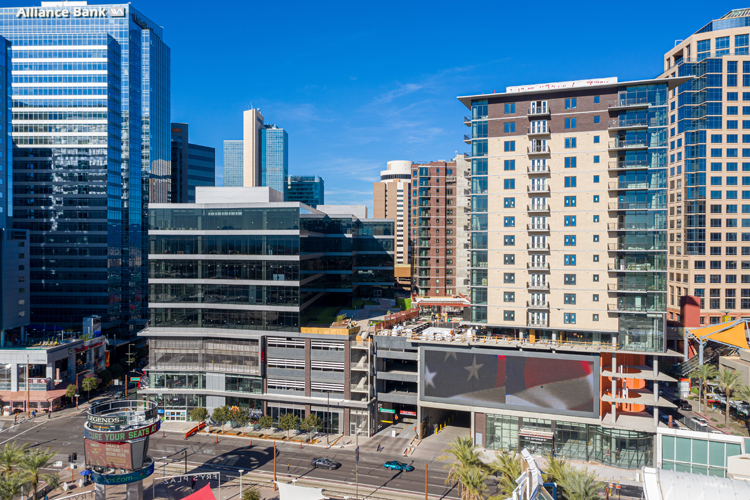
The first and most obvious difference is directly across Jefferson St. from the arena. Block 23 as it is known, has been home to Phoenix City Hall, a movie theater, JCPenny, fallout shelter, and by 2010, a surface parking lot. In the grand Phoenix tradition, the old was bulldozed for the new, and then the cycle began again (check out this good summary from several years ago). In 2017, Red Development, the team behind CityScape next door, broke ground on a new development that took Block 23 from surface parking to a dynamic, urban mixed use space. Now complete, it has Downtown Phoenix’s first and only grocery store and 330 units of housing, all steps from the arena. With Block 23 built upon, the Suns’ urban arena suddenly feels much more urban.
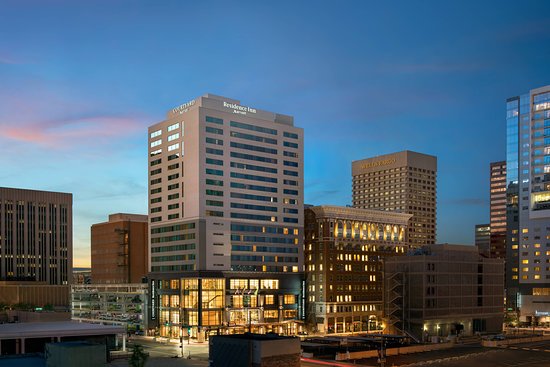
But it’s not just Block 23 that has a new high rise near the arena. Just a block away on Central Ave., a dual-branded Marriott hotel, home to the excellent Litual Rituals bar, opened in 2017. In addition to this property, Marriott also opened an AC by Marriott property at the Arizona Center this year. And the hotels don’t stop there! A 11-story Hampton Inn & Suites opened next to Arizona State University’s Downtown Phoenix campus in 2018, just five blocks from the arena.
Hotels are wonderful, but a major growth sector for Downtown Phoenix has been multifamily housing. In addition to the 330 units I mentioned earlier, several projects have either been completed or have broken ground in the 11 years that the Suns have lived in the playoffless wasteland. Perhaps the most exciting development for Downtown Phoenix, which was once a handful of office towers and little else, housing means that there is a year-round liveliness that was lacking before the residents (and ASU) came.
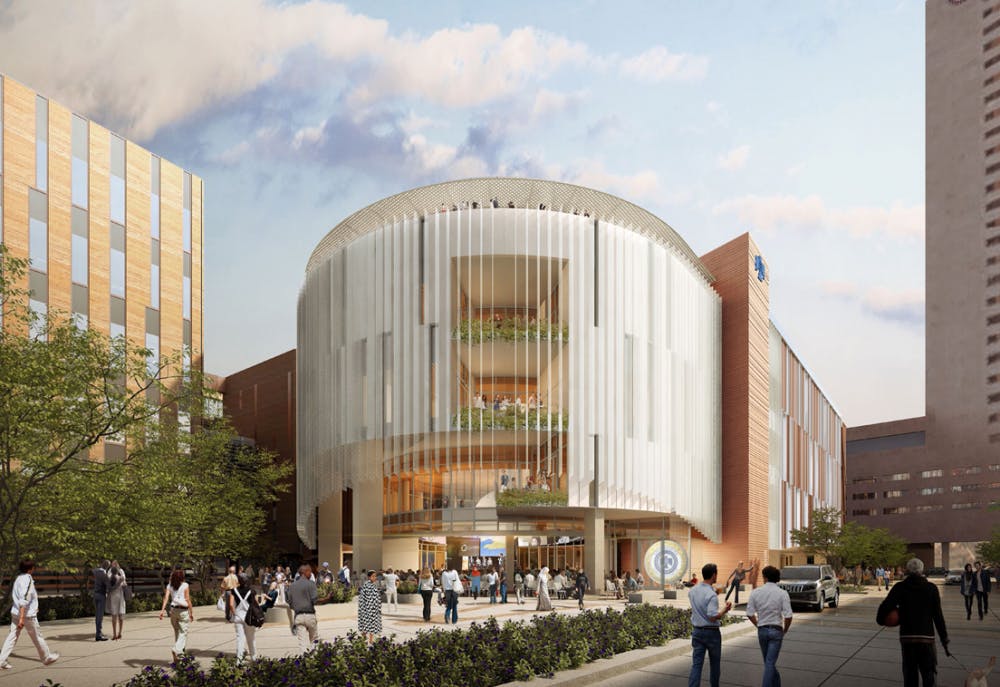
I want to start with what’s under construction currently, because perhaps the most noticeable difference between 2010 today is the sheer abundance of cranes! According to Downtown Phoenix Inc., there are currently 11 housing developments, either mid-rise or high-rise, in Downtown Phoenix. This amounts to 3,433 units, which, in raw terms, is A LOT. The most notable of these, at least in terms of skyline alteration, are X Phoenix and phase two of the Link. X Phoenix will be a 20-story, 253 unit building when complete, while phase two of the Link will be 25-stores and 204 units.

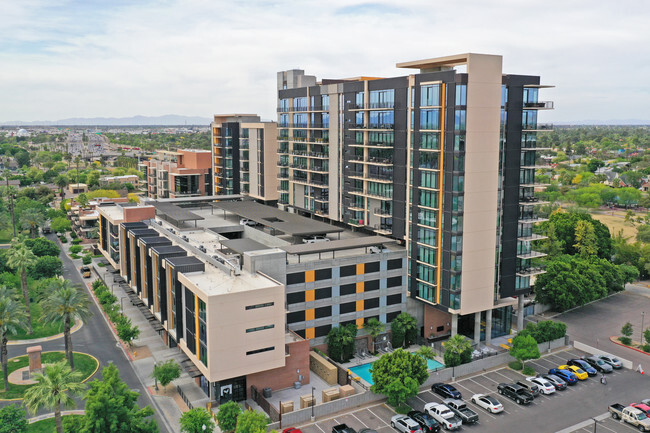
While several notable housing developments have changed the Phoenix skyline, I’d like to focus on two here that have come about in the last handful of years: The Stewart and The Link (phase one). The Stewart, at Central Ave. and McKinley St., opened in 2019 and rises 19 stories. It represents a northward push for towers in Downtown Phoenix and is hard to miss as you cross Hance Park into Downtown Phoenix on Central Ave from the north. To the east rises the Link, a 30-story tower with 252 units. The Link stands out as the most north and east high-rise – at least until phase two is complete.

There are a ton of other mid-rise projects that have been built or are under construction now, but suffice it to say that Downtown Phoenix is booming. I didn’t even get into the renovations, retail developments, or entertainment venues here either. There’s a reason for that though. Plenty of sources, including the irreplaceable Downtown Phoenix Inc., have chronicled the growth of the area. What’s more important than the growth, however, is the feel. Streets that were once dead are now full of life, connecting previously isolated sections of Downtown Phoenix. This means that for pedestrians, the most important of all urban travelers, Downtown Phoenix is far more accommodating, entertaining, and engaging. It keeps you walking and makes you want to explore, stay, spend, and live in Phoenix’s urban core.

I would be remiss if I didn’t mention the impact of Arizona State University in more detail. Currently building a 16-story dorm next to Civic Space Park, ASU has contributed buildings and students to Downtown Phoenix in a way that has catalyzed other investment. They’ve taken over the Mercado and built new buildings at the Phoenix Biomedical Campus (which has grown in its own right, thanks to every major Arizona university). ASU is also building its new Thunderbird School of Global Management building in Downtown Phoenix, adding yet more to its footprint. Now, ASU was there before the Suns last made the playoffs, but they have built a lot since then as well.
It has to be noted that there is so much more that I could not get to here. From Roosevelt Row to the areas near 7th Avenue, the City and others have invested a lot in making Downtown Phoenix work. As somebody who works in the downtown world, I know that these things take a long time to pay off. It takes the government, and activists, and community will, rather than a new General Manager, a point guard, and actual NBA players. And not unlike the rebuilding of the Suns, reinvigorating a downtown takes time, even if there isn’t a timeline.
All this is to say that, for many, the first glimpse of Downtown Phoenix they will see in many years will be on the NBA broadcast this Sunday. And I think what they’ll see will surprise them. So let’s beat LA this series and hope that the Suns playoff fortunes will turn around, because I can’t wait for the championship parade through Downtown Phoenix.
Sources for this story include: Basketball Reference, This Could be Phoenix, ARMLS, ABC 15, Hotel News Resource, The Arizona Republic, AZ Big Media, Downtown Phoenix Inc., Curbed, Red Development, Arizona State University, and the Phoenix Business Journal.

 Desert City Dispatch